Dog First Aid Every Owner Should Know (Before You Need It)
Jun 3, 2026
Most days with your dog are made up of the great moments like sleepy sofa cuddles, excited greetings at the door, and the occasional mystery item that they bring you looking pleased as punch.
No dog owner wants to think about that moment of panic when something doesn’t feel quite right.
Maybe they’ve cut a paw on a woodland track, suddenly started limping halfway through a walk or eaten something questionable before you could stop them.
Knowing a few first aid basics can make all the difference — not to replace your vet, but so you can act calmly and confidently when it matters.
First things first: stay calm
Dogs are brilliant at reading us. If we panic, they often panic too. In stressful situations, the best thing you can do is slow things down. Speak gently, move slowly, and focus on making the environment safe for both of you. Even the friendliest dogs may react differently if they’re frightened or in pain, so avoid rushing in too quickly. You don’t need to have all the answers immediately but staying calm is already helping.
Know when to call the vet urgently
One of the most useful things any dog owner can learn is recognising when something may need veterinary care quickly. Contact your vet urgently if your dog:
Struggles to breathe
Collapses or becomes unresponsive
Has heavy bleeding
Experiences a seizure
Shows signs of heatstroke
Has a swollen stomach
Can’t stand or walk properly
Vomits repeatedly
Eats something toxic
And honestly, if something feels off, trust that feeling and ask for help. When in doubt, it's far better to ask than to wait and see. Waggel customers have access to Joii's 24/7 online vet — so there's always someone to check in with, day or night, before deciding what to do next.
Everyday injuries can happen more often than you think
Cuts, paw injuries, and limping
Adventures are part of life with dogs, but so are occasional bumps and scrapes. Paw pad cuts are common on woodland trails, rocky paths, and hot pavements. Rinse with clean water, apply gentle pressure with a clean cloth for at least three to five minutes without lifting, and keep your dog calm. If bleeding and it doesn't slow, seek veterinary attention.
If your dog starts limping mid-walk, stop and check between the pads for thorns, grass seeds, small cuts, or trapped stones. Sometimes it's minor — sometimes it’s a sprain and may need rest or treatment — but checking properly prevents small problems becoming bigger ones.
A few basic first aid bits in your walking bag can go a long way too.
Bleeding wounds
For any bleeding wound, apply firm pressure with a clean cloth or gauze and hold it for a minimum of three to five minutes without lifting — lifting too soon restarts the clotting process. If bleeding is severe and won't stop, a tourniquet can be applied above the wound as a last resort, but get to a vet immediately. Never remove embedded objects yourself.
CPR and rescue breathing
In the worst case scenario, if your dog is unresponsive and not breathing, check for a heartbeat by placing your fingers on their chest behind the front left leg.
Lay them on their right side
For chest compressions: place both hands over the widest part of the chest and compress firmly at a rate of 100–120 per minute, pushing down about a third of the chest depth
After every 30 compressions, give two rescue breaths by closing their mouth, cupping your hands around their muzzle, and breathing into their nose until you see the chest rise
Continue until they breathe independently or you reach a vet
Choking
Signs include pawing at the mouth, distress, blue-tinged gums, or a high-pitched sound when breathing. Open the mouth carefully and look for the obstruction — if you can see it and safely reach it, remove it.
If you can't dislodge it: hold your dog with their back against your chest, make a fist just below the ribcage, and give five firm thrusts inward and upward (a modified Heimlich). Alternate with five sharp blows between the shoulder blades. Get to a vet even if the object is removed, as internal damage is possible.
Seizures
Don't restrain your dog during a seizure — you could injure them or yourself. Instead: clear the area of anything they could hurt themselves on, time the seizure, keep the room dim and quiet, and speak calmly. Most seizures last under two minutes. If it lasts longer than five minutes, or your dog has multiple seizures in quick succession, this is an emergency and you need to call your vet immediately.
Heatstroke is one of the most common risks
Dogs overheat much faster than we do especially during warmer weather or energetic walks, and it can escalate quickly. Watch for
Excessive panting
Thick drool
Bright red gums
Weakness
Vomiting
Confusion
Collapse
If you suspect heatstroke: move them somewhere cool immediately, offer small amounts of water, and apply cool (not cold) water to their paws, tummy, and chest. Never use ice — it constricts blood vessels and can make things worse. Contact your vet urgently, even if they seem to recover. And remember: if the pavement feels too hot for your hand, it's too hot for their paws.
Burns
Run cool water over the burn for a minimum of ten minutes — longer is better. Never use ice, butter, or any creams. Cover loosely with a clean, non-fluffy cloth and get to a vet. For chemical burns, rinse thoroughly with water and avoid touching the affected area without gloves.
Bee stings and allergic reactions
Remove a visible bee stinger by scraping it out sideways, don't squeeze it. Apply a cool compress to reduce swelling in the area. Watch closely for signs of an allergic reaction:
Sudden swelling around the face or throat
Vomiting
Collapse
Difficulty breathing
This can escalate quickly and may need emergency veterinary care immediately.
Eye injuries
If something is in your dog's eye, don't rub it or try to remove it with your fingers. Rinse gently with saline solution or clean water from a syringe or cup, flushing from the inner corner outward. If the eye is closed, swollen, or your dog is in obvious distress, see a vet promptly — grass seeds in particular can cause serious damage very quickly.
Suspected broken bones or spinal injuries
If you think your dog has broken a bone or injured their spine, restrict movement as much as possible. Don't try to splint or straighten a limb. Slide them gently onto a flat surface — a board, a jacket stretched between two leads, or a blanket — keeping the spine as still as possible, and get to a vet urgently. Muzzle them gently if needed, as even calm dogs may bite when in pain.
Dogs eat things they shouldn’t — it happens
Common dangers include chocolate, grapes and raisins, xylitol (found in sugar-free products), onions, human medication, and certain plants. If your dog eats something potentially harmful or toxic: call your vet immediately, keep any packaging nearby, and don't try to make them sick unless a vet specifically advises it.
Ticks
Use a tick removal tool rather than your fingers. Grip the tick as close to the skin as possible and pull steadily upward without twisting or squeezing the body — squeezing can push bacteria into the wound. Clean the area with antiseptic after. Never burn a tick or cover it with Vaseline.
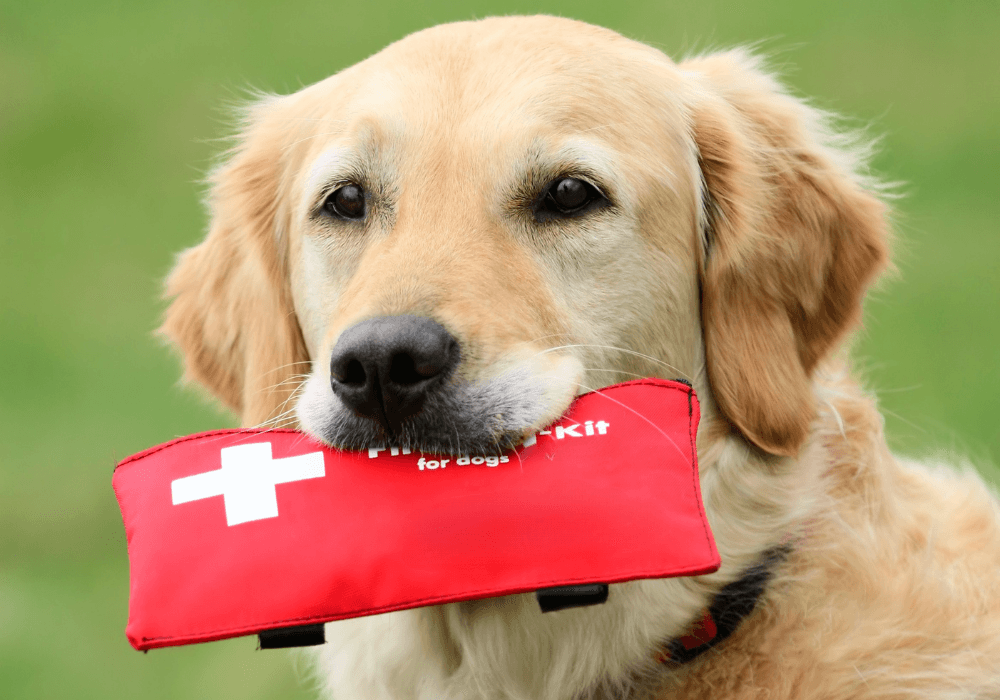
Build a simple first aid kit
A basic kit could include:
Bandages and gauze
Tweezers
A tick remover
Saline solution
Disposable gloves
A towel or blanket
Your vet's contact number.
Keep one at home and one in the car.
VioVet are offering 25% off their first aid kits to Biscuit app users — a great excuse to get one sorted.
Know your dog
You notice when they're quieter than usual, when their appetite changes, they look a bit stiff on a walk, or when something just seems off. Those subtle signs are often the earliest signal that something needs attention. Trusting your instincts is part of being a great owner.
You don't need veterinary training to make a real difference. Staying calm, knowing the basics, checking paws after walks, carrying water with you on warm days and knowing when to ask for help — that's what being there for your dog actually looks like 🐾